
The Heritage Railcar Weekend will this year take place on Saturday 17 and Sunday 18 October.
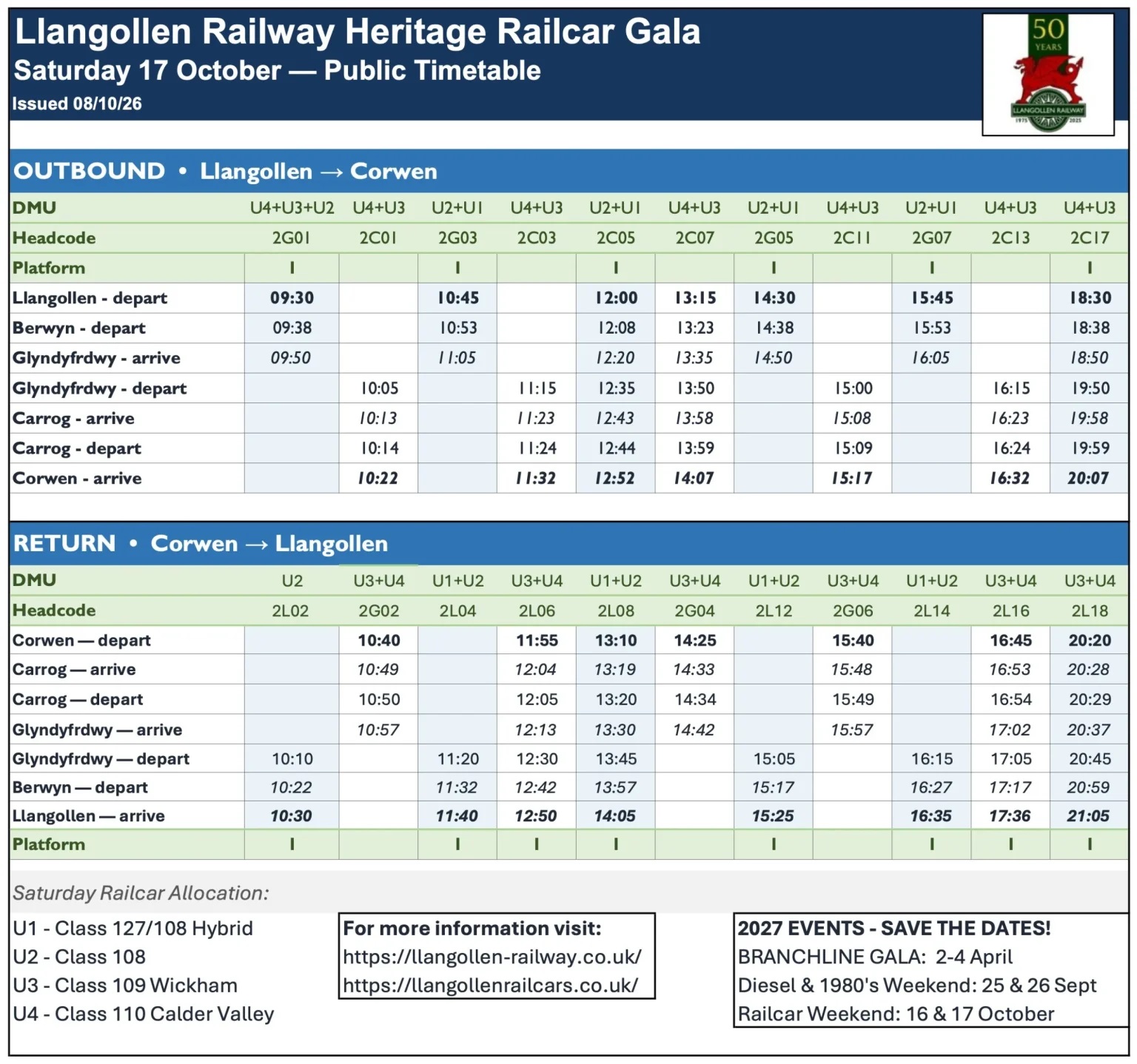
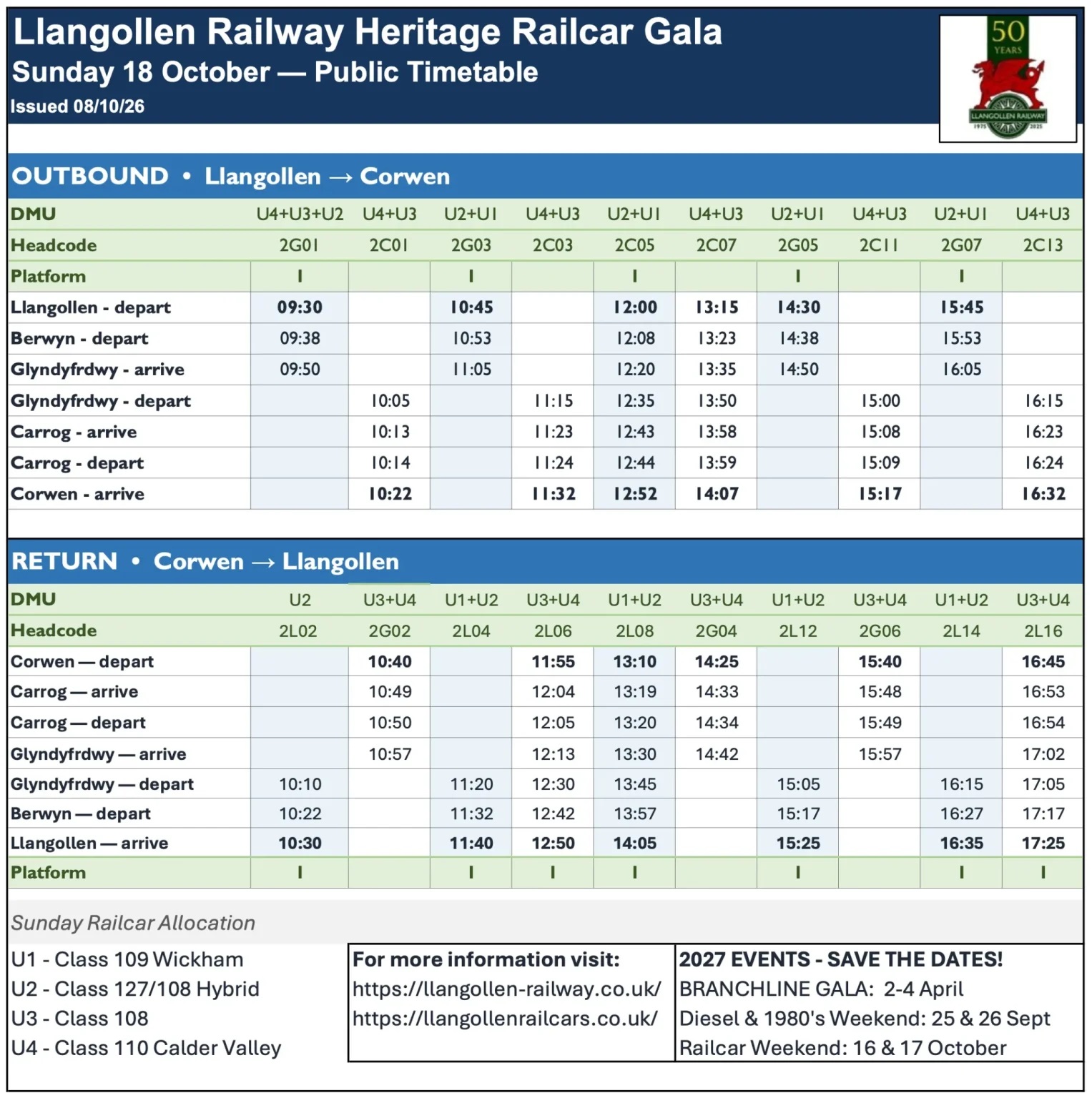
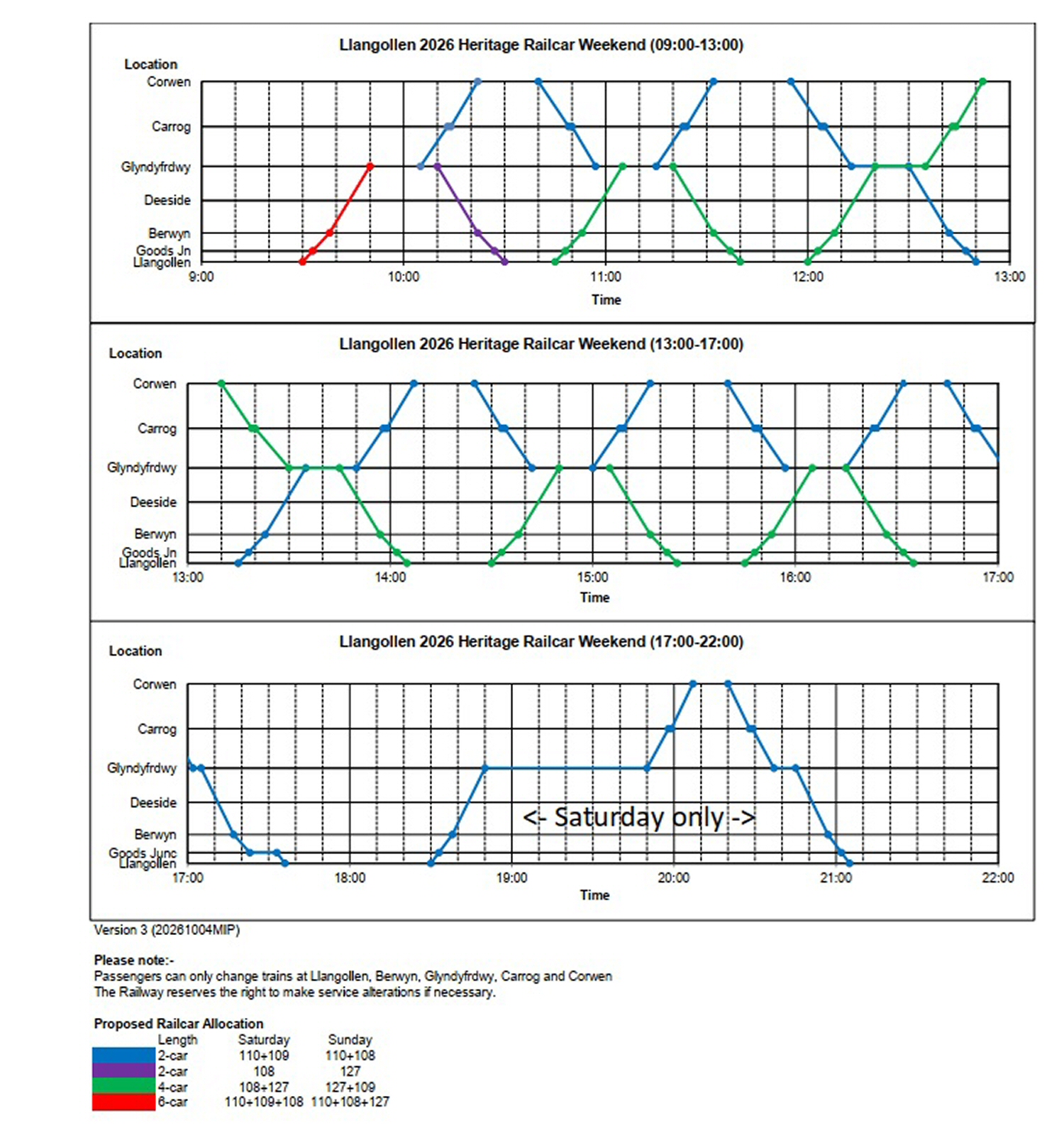
The graphical timetable is available in .pdf format to facilitate printing: PDF version of the graphical timetable
Further information can be found on the Railway's website at https://llangollen-railway.co.uk/heritage-railcar-gala/
This edition is almost exclusively about the work that took place at our Pentrefelin Depot, Llangollen during the weekend of 4-5 October when further work on the Birmingham class 110 'Calder Valley' unit to prepare it for its public debut at the Heritage Railcar Gala (see above) was followed by a successful test run to Corwen and back.
The Cravens class 105 trailer car was also given some make-up and buffers to prepare it for public display at Llangollen Station during the gala weekend.
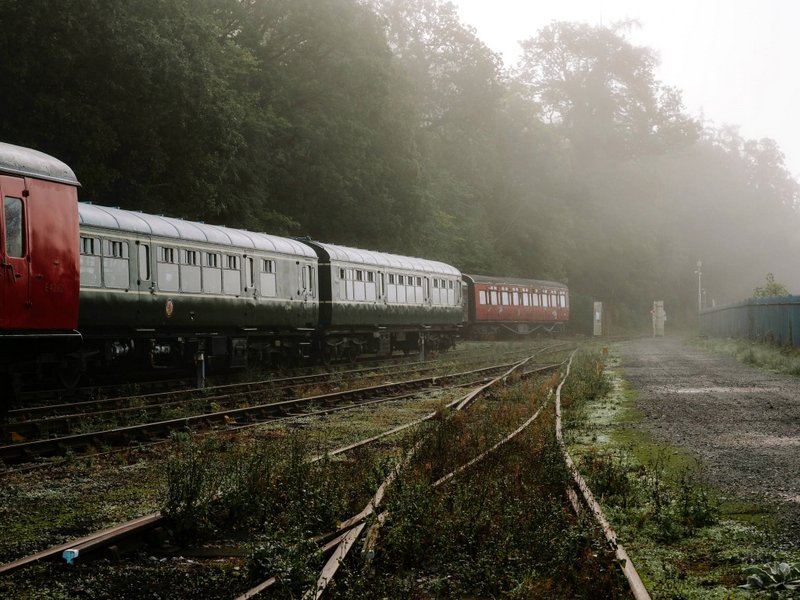
The weekend started cold, damp and misty, with the Wickham awaiting its next duty in Pentrefelin.
Since the previous report, the timetable 'A' October services were provided by the Wickham class 109 on 2nd and the class 108 on 1st, 7th, 8th, 9th and 14th.
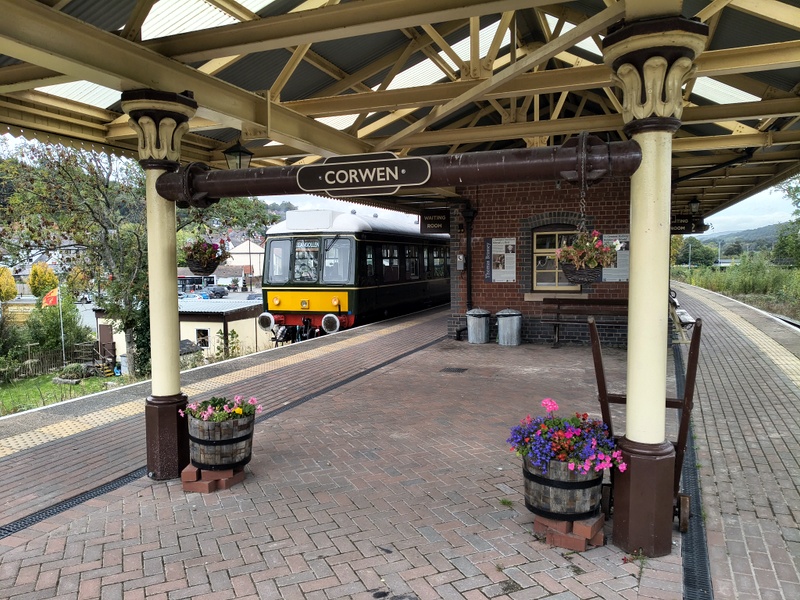
The above photo shows the class 108 at - yes - you've guessed it - Corwen on Wednesday 14/10/26 shortly before working the final service of the day to Llangollen.
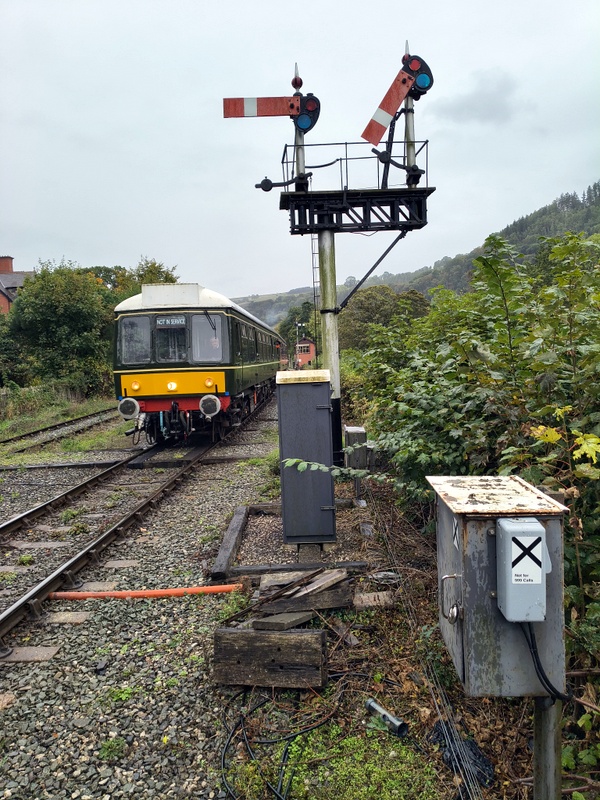
The class 108 heading back to the depot in wet weather after the close of play on Thursday 08/10/26.
The class 110 was also allowed to play out during the evening of Saturday 04/10/26 to undertake a test run to Corwen and back prior to it making its public debut at the forthcoming Heritage Railcar Gala (see above). We are pleased to report that, despite a couple of hiccups (or were they hiccoughs?), as described below, the test was successful both in terms of the unit's operation and its failure to interfere with any railway infrastructure.
Despite what some on social media might have you believe, things don't always go to plan, and the 110 threw in a couple of curved balls just to keep us on our toes. As the group assembled for the test run, the yard was cleared ready for it to depart, final checks on the new instrument panel - and a fuse went pop. New fuse, press the buzzer, pop. 3802 whistles in the distance to indicate that we can have the token and get going; the 127 has disappeared to clear our way out; the General Manager wants to make a promo video; members have travelled from Shrewsbury and Bury just for the occasion; others have arranged transport especially; and the electrics died. No pressure to sort that out then! A quick deduction as to an error made earlier in the day, tape the buzzer button out of use, and we get going. We got there and back, and the handful of spare fuses wasn't required in the end. Fixed on Sunday morning, but then it threw us another googly right at the end of Sunday: the saloon lights will turn on but not off any more? That's for another day.
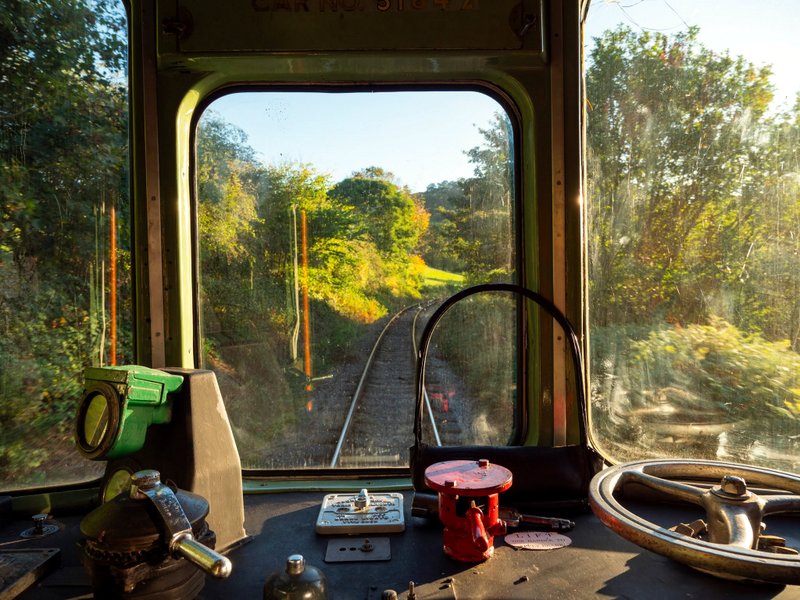
Approaching Glyndyfrdwy in the evening sunshine.
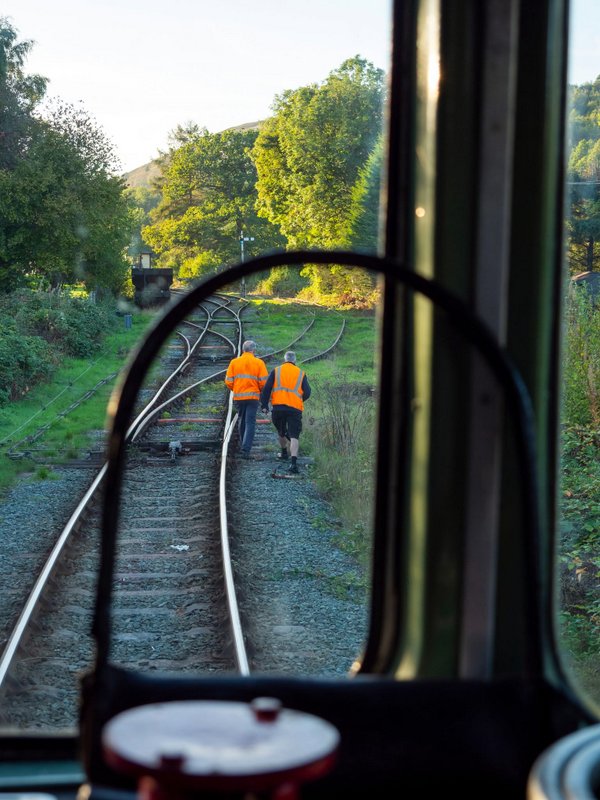
A walk at Glyndyfrdwy: as the signalman had booked off, it was "self service" to deal with opening the gates and changing tokens.
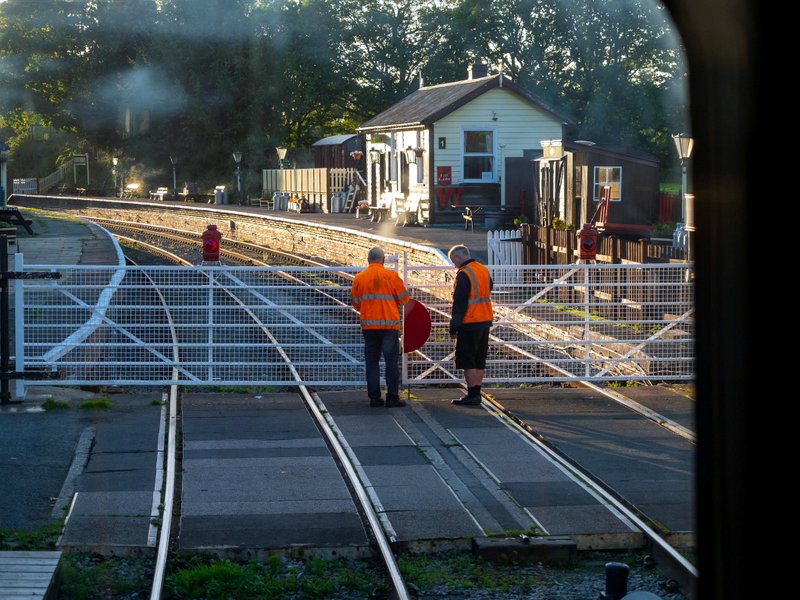
"Which way do these work again?"
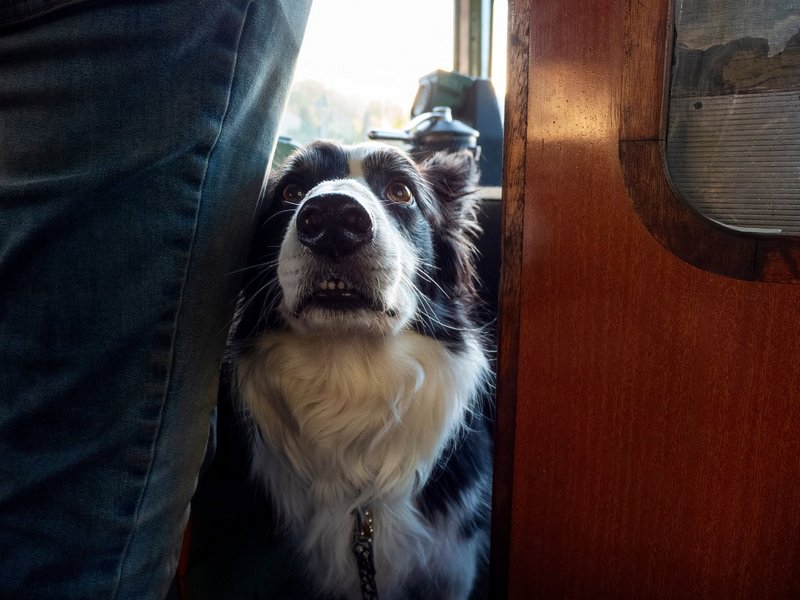
Four-legged assistant in case we had to herd sheep again. Trains are not very good for herding sheep.
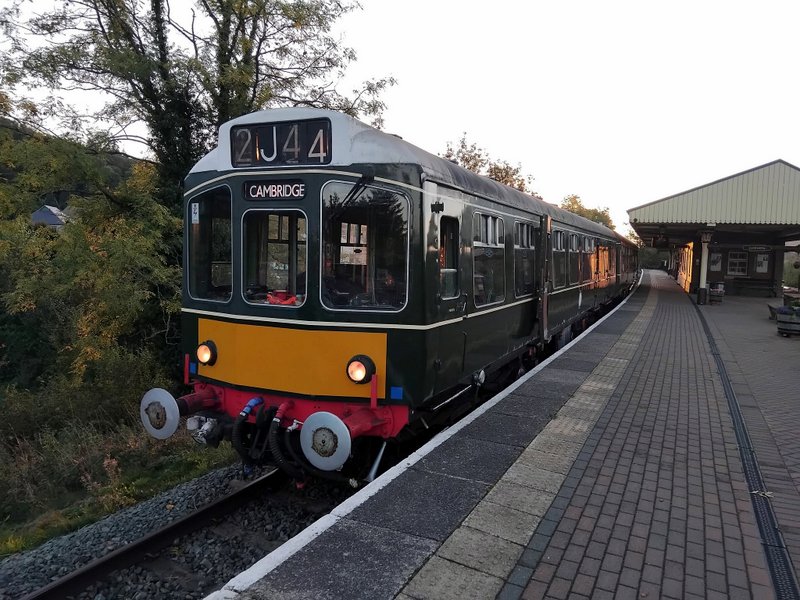
Well, the class 110 made it to Corwen!
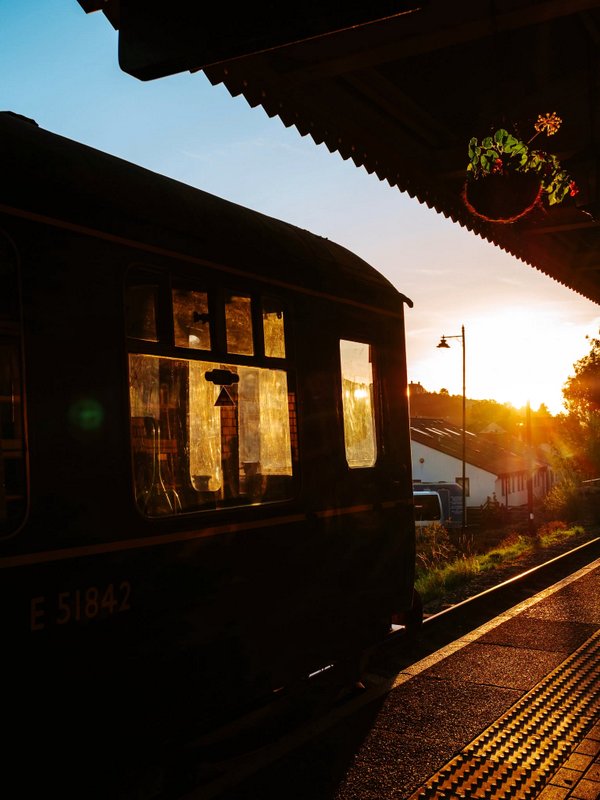
The class 110 rests at Corwen at dusk after a successful test run - at least, in one direction so far.
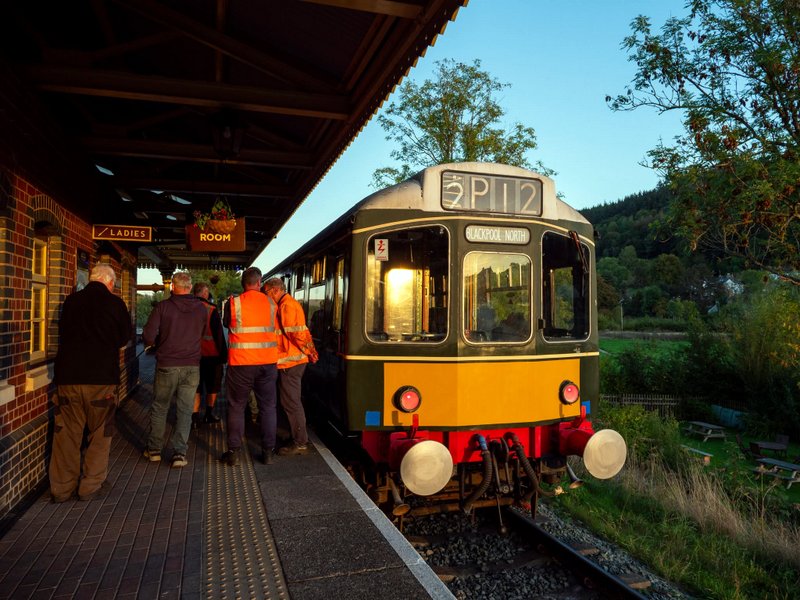
The class 110 and the team rest at Corwen at dusk after the successful test run.
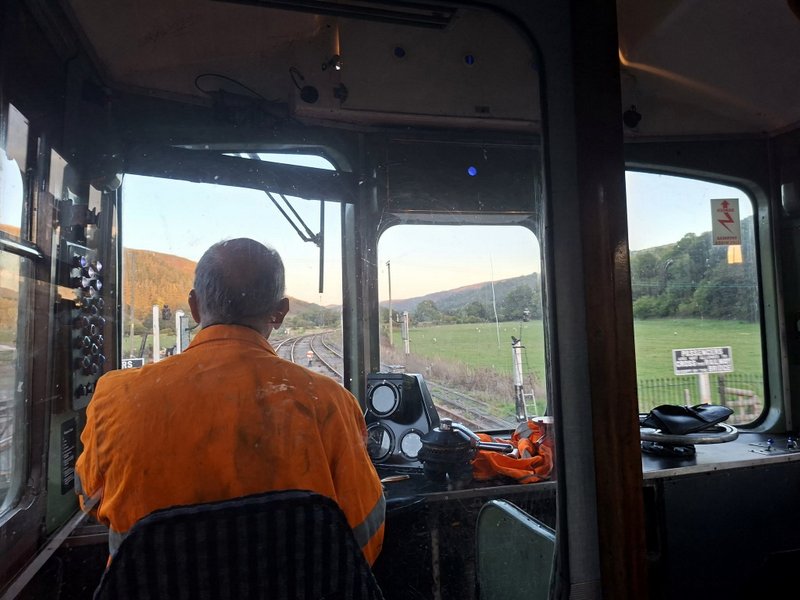
Traction Inspector Parkin heads back from Carrog.
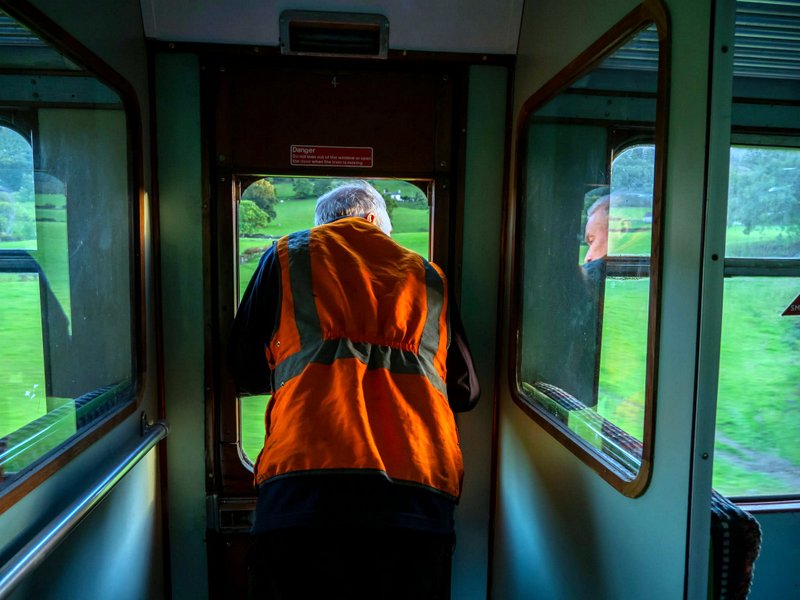
George checking that the scenery is still going past as expected
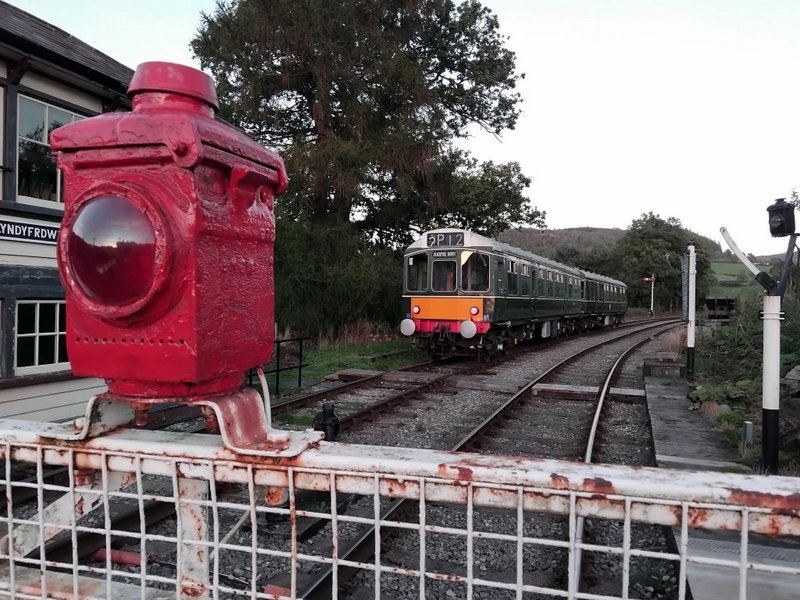
Posing at Glyndyfrdwy before heading back to base.
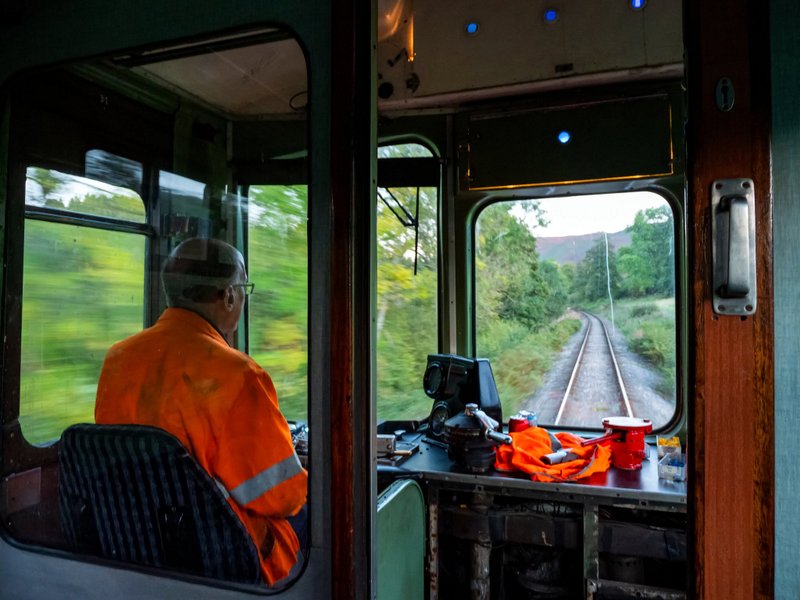
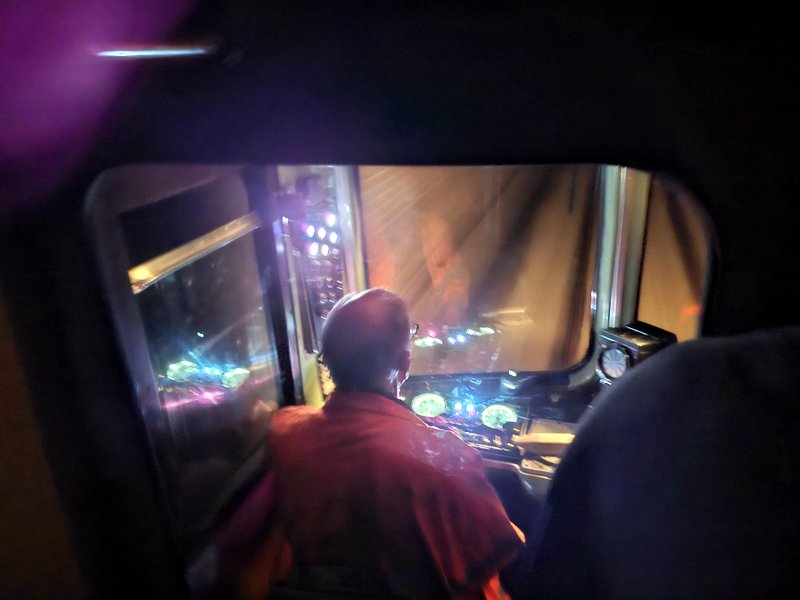
Downhill through the darkness of Berwyn Tunnel. LED instrument lights were fitted instead of the original 'glow worm in the general area' which was never much good.
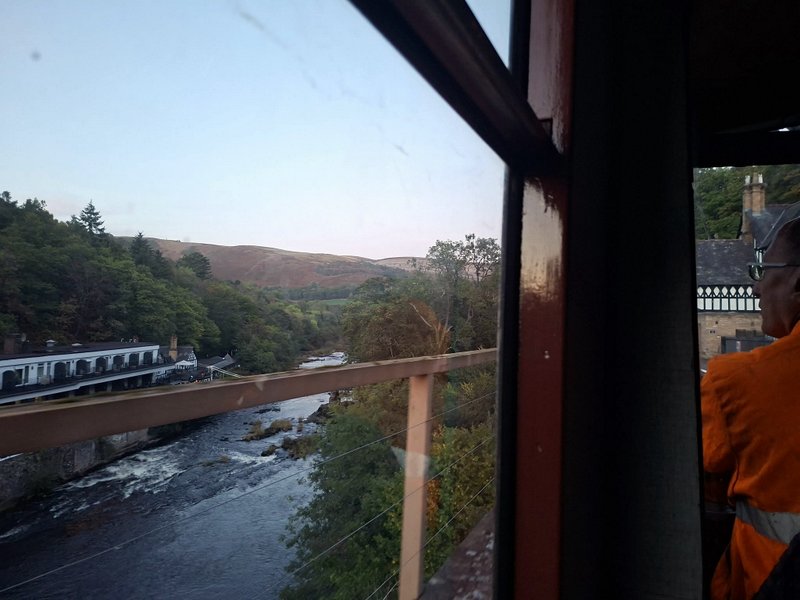
Rolling through Berwyn in the failing light.
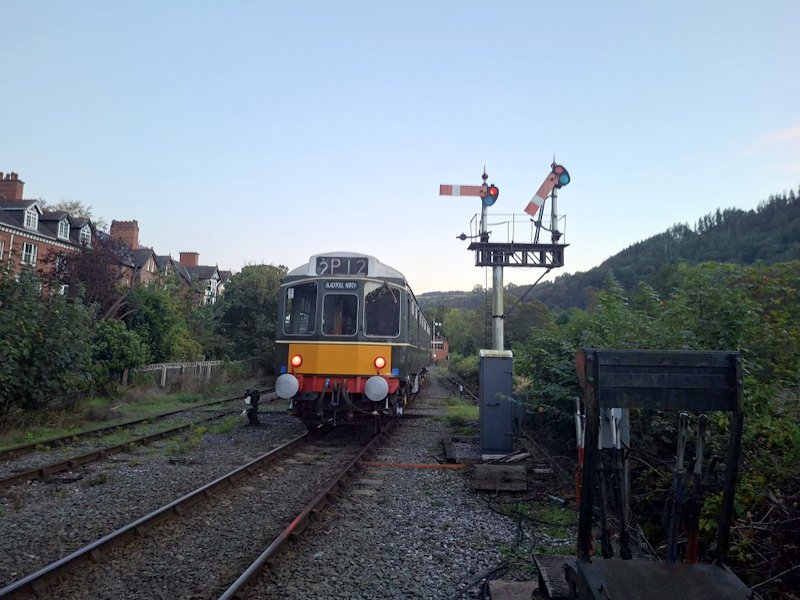
Heading back to base after the test run. Mission accomplished!
Cravens class 105 trailer car no. 56456 (undergoing restoration at Llangollen)
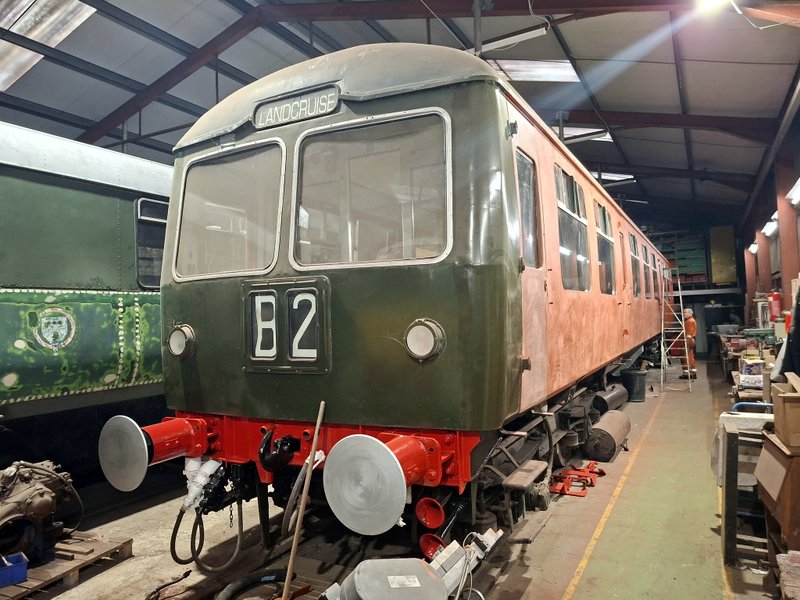
The Cravens trailer was in primer all down the driver's side for the first time in many years...
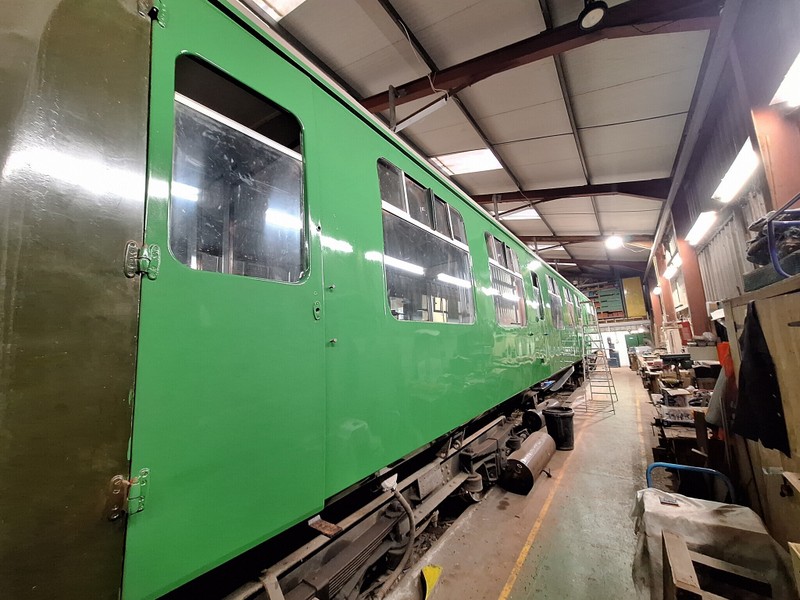
...but it wasn't long before that was covered by green undercoat!
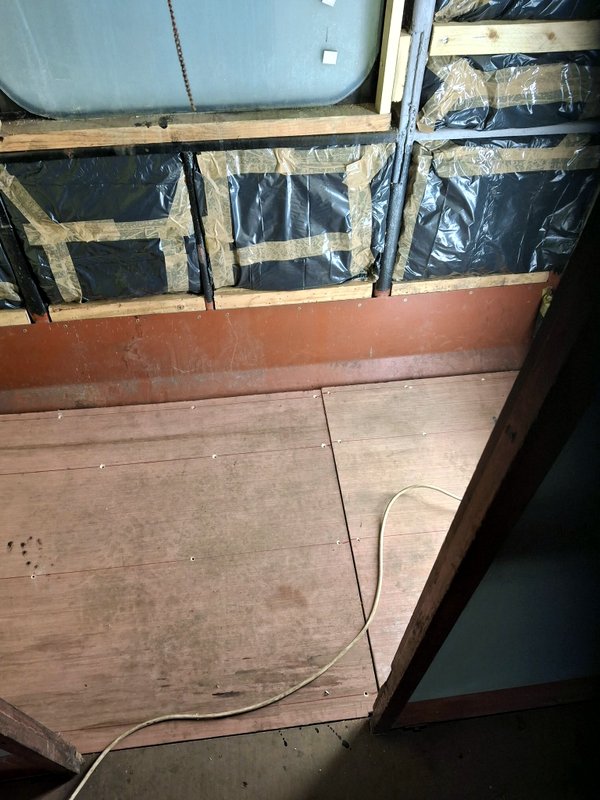
Some of the not-so-glamorous bits of railway preservation that will (hopefully) not be seen again for a long time. The toilet walls getting insulated ready for the new panelling to be fitted, and new flooring underway.
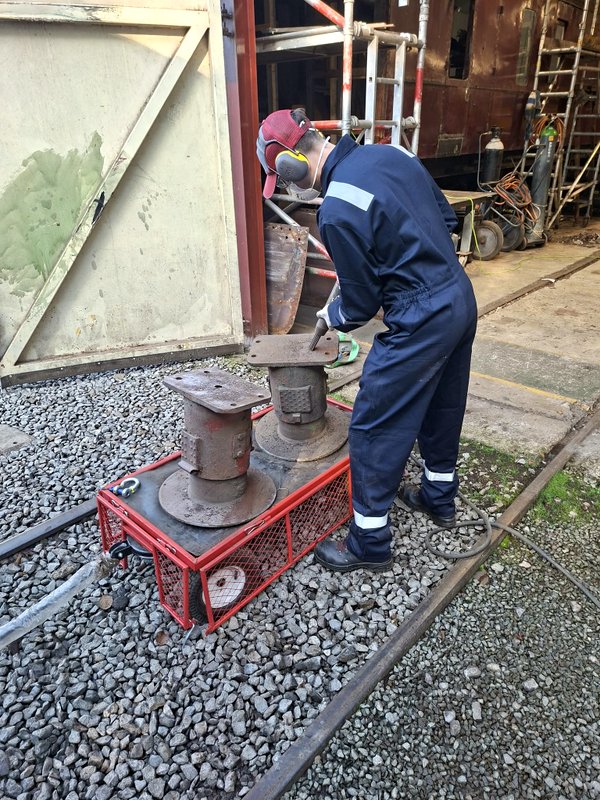
Tom needle gunning the buffers from the back of 56456. Even the needle gun decided to play difficult and we had to resort to borrowing another. (sorry, C&W!)
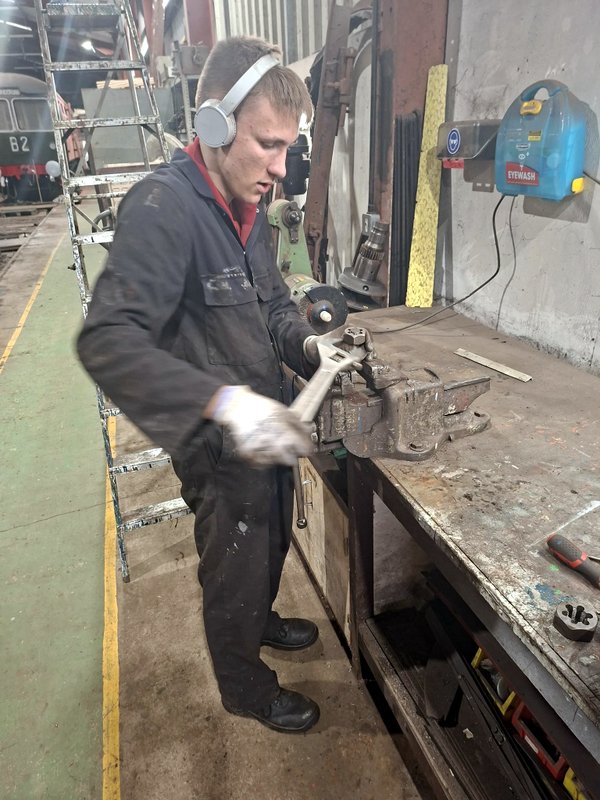
Declan using a die nut to clean up the bolts for the buffers.
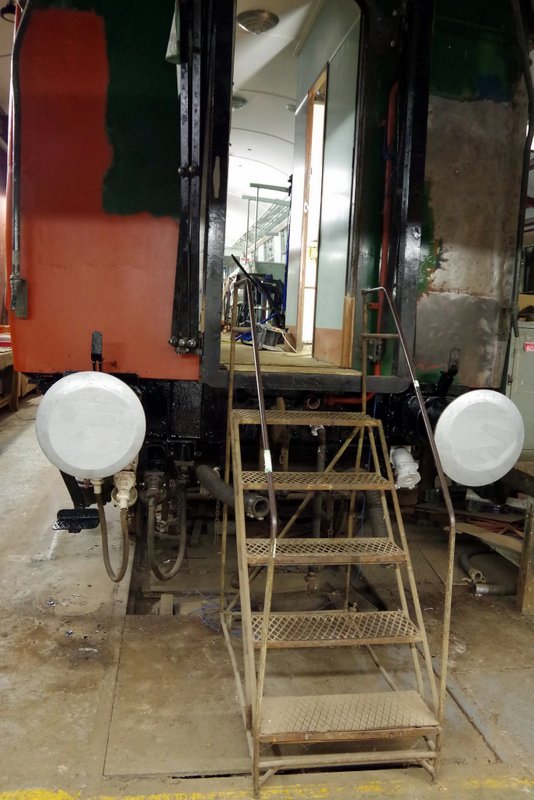
Buffers refitted to the back of 56456 and given a coat of paint ready for their imminent public appearance.
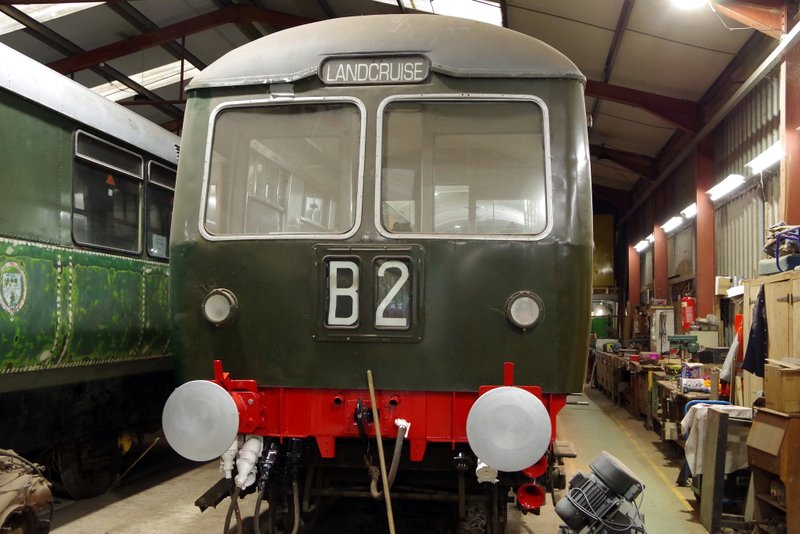
The front end of 56456 starting to look the part as well.
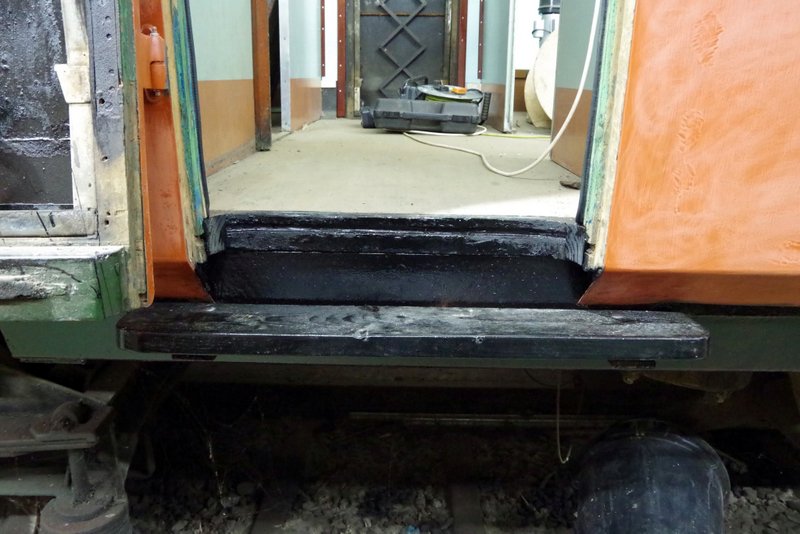
One of the step boards refitted to enable public access to 56456 whilst it's on display in Llan station.
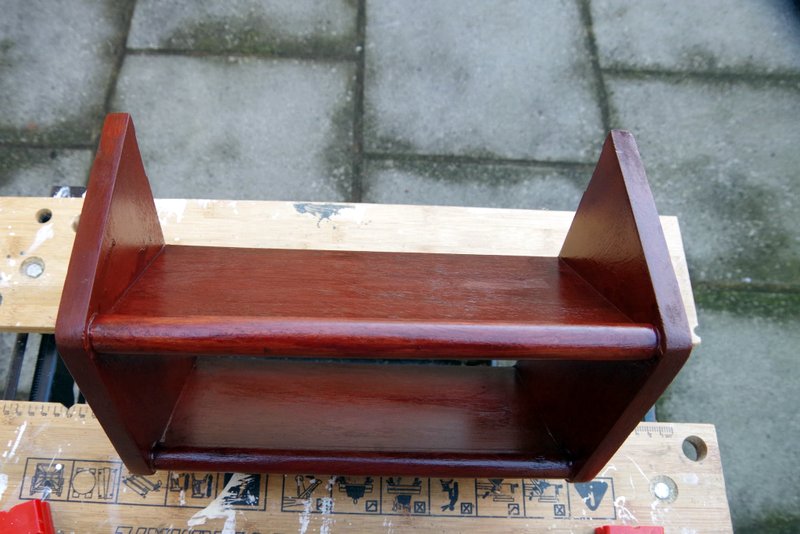
One of many little homework projects, the paper towel holder for the toilet, stripped back to bare wood, stained and varnished.
Class 110 51813/59701/51842
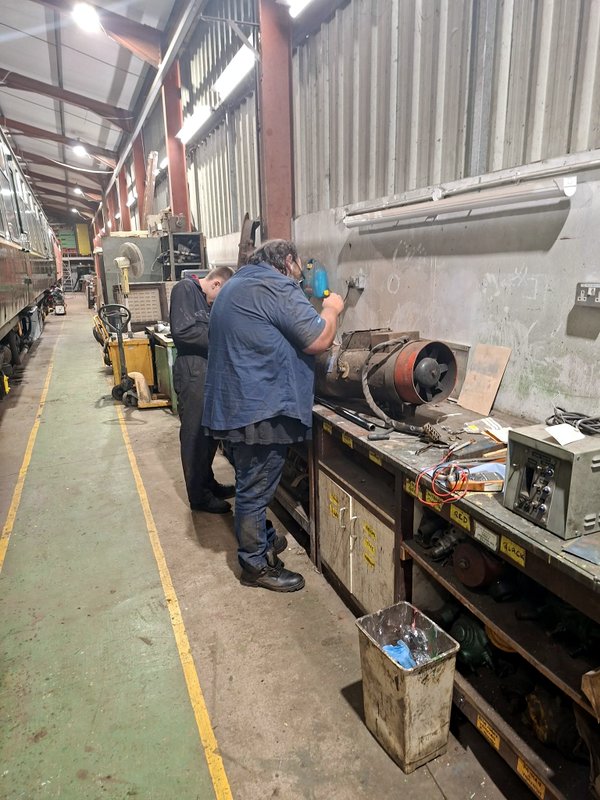
Peter and Declan deal with servicing a Smiths heater from 51813. It's a crude device that drips Diesel onto a spinning disc, that then throws it at a hot bit of wire to set fire to it. They work quite well though (when they work).
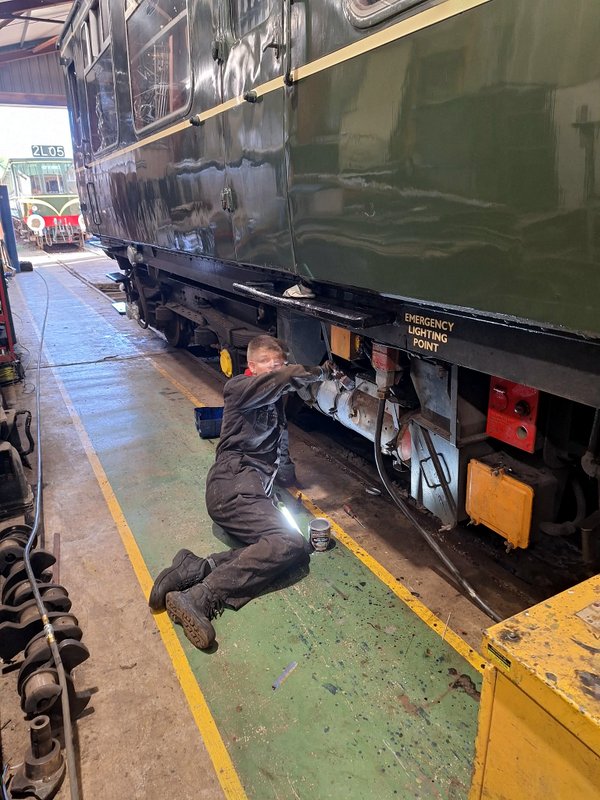
Applying a coat of silver paint will obviously make it work better. Declan with the paintbrush.
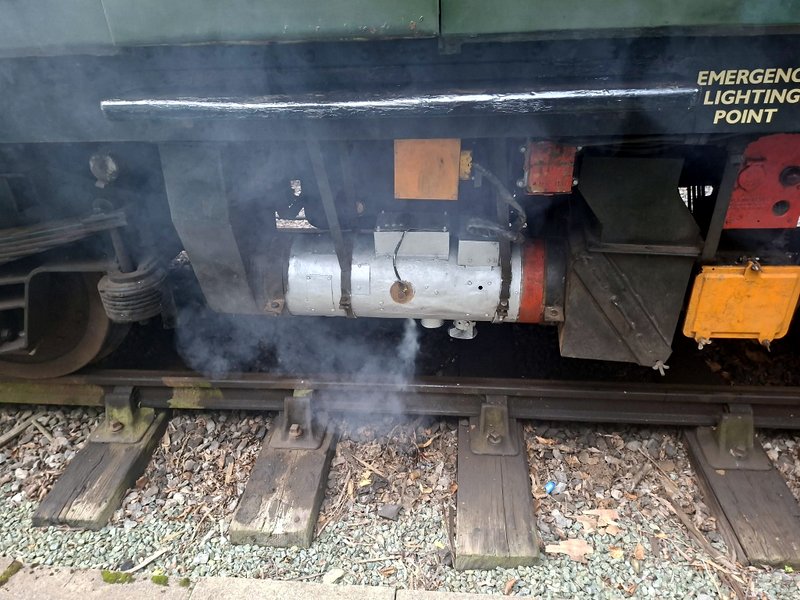
Success! The silver paint obviously worked, as the heater fires up after a couple of attempts. A bit smoky at first, but it evidently hadn't run for quite some years.
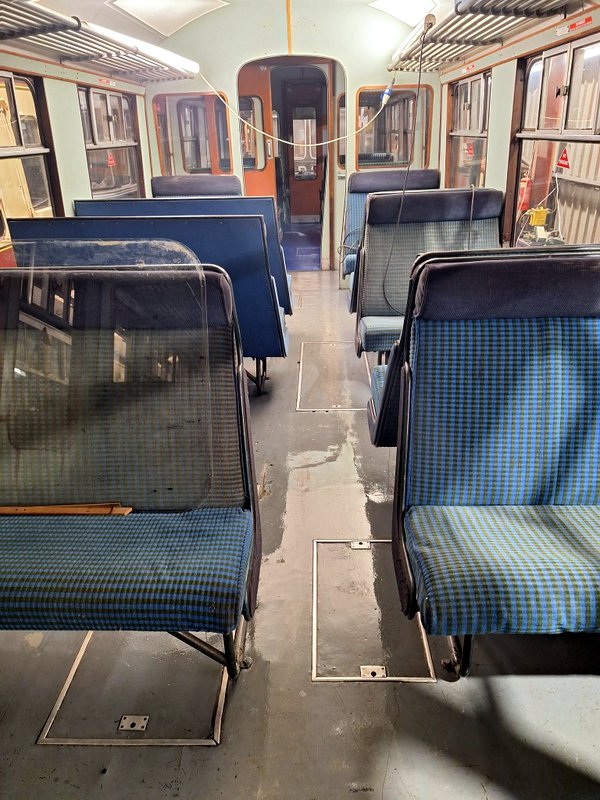
Cleaning the interior of 51842 ready for the gala. For the moment it has (approximately) the seats it arrived with - "Bournemouth Blue" cloth, albeit faded in places. Hopefully the Winter will see chance to refurbish this interior to match 51813.
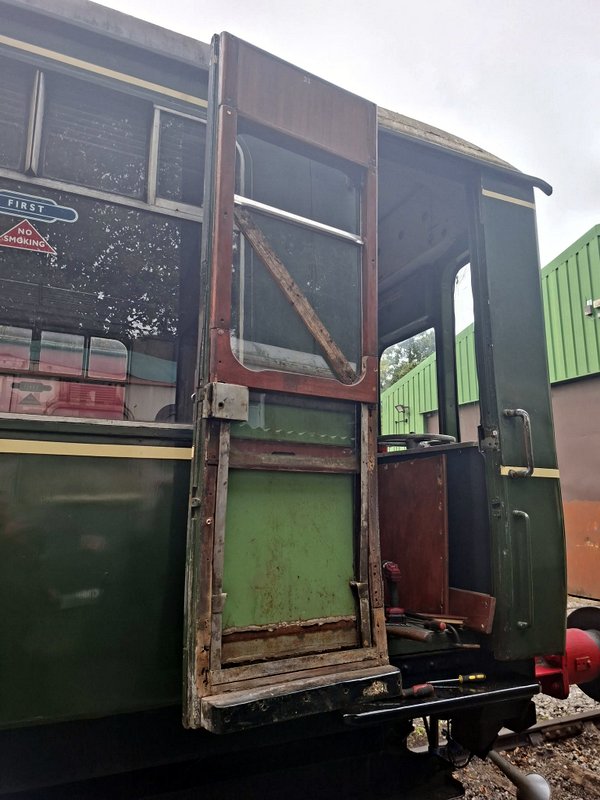
The secondman's cab door on 51842 decided to play difficult. As well as making a loud screech as the window is opened, the 'scissors' that hold the window up decided to give up as well. The door is 'scissor-less' whilst repairs are made. Unfortunately dealing with the noise is rather more involved and will have to wait for another day.
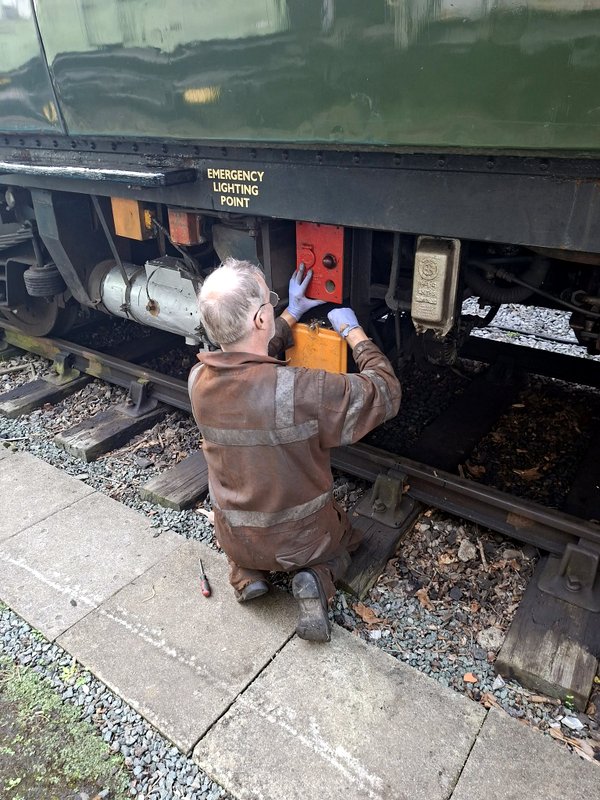
George sorting out one of the fire alarm control panels on 51813. These shut an engine down if a fire is detected, light a lamp, and ring a bell throughout the train. Well, they do if they're working properly anyway.
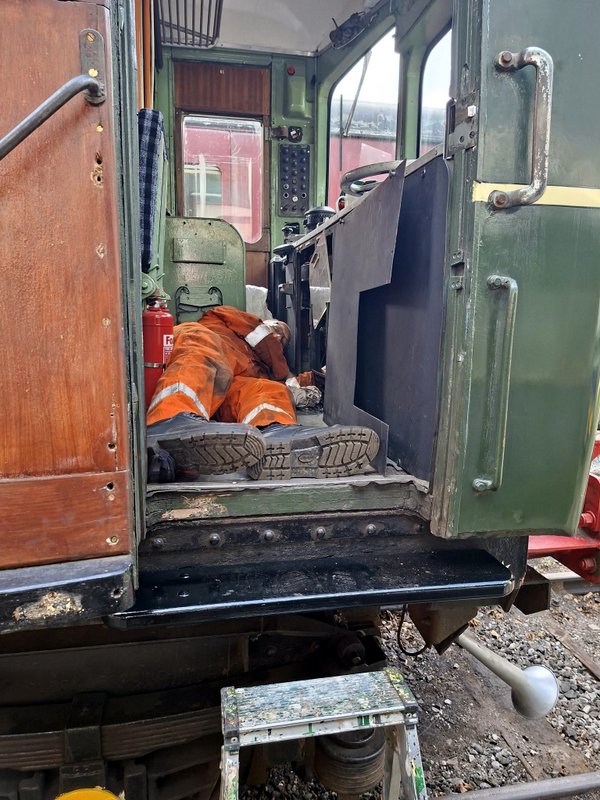
Not just having a snooze in the cab - Graham working on brake valve adjustments under the desk of 51842.
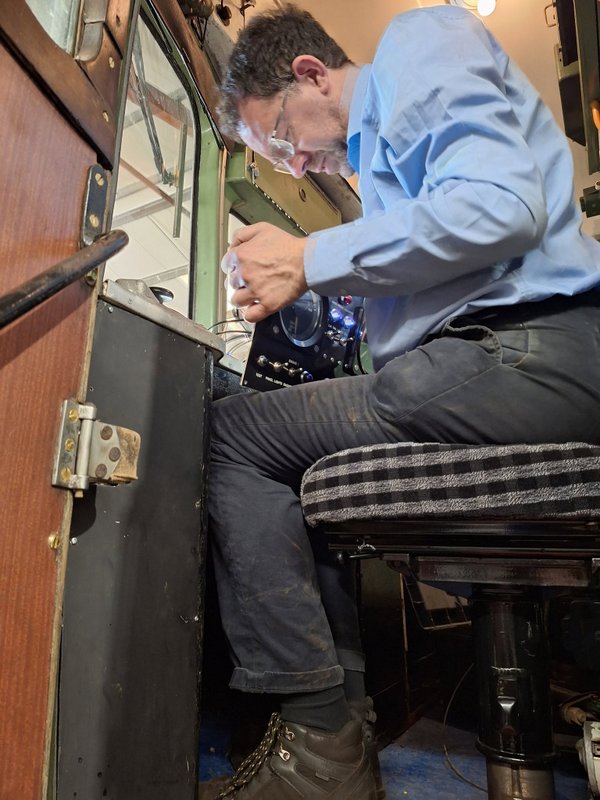
The electrical dept working on the new instrument panel in 51813. Chance to sample the newly upholstered driver's chair.
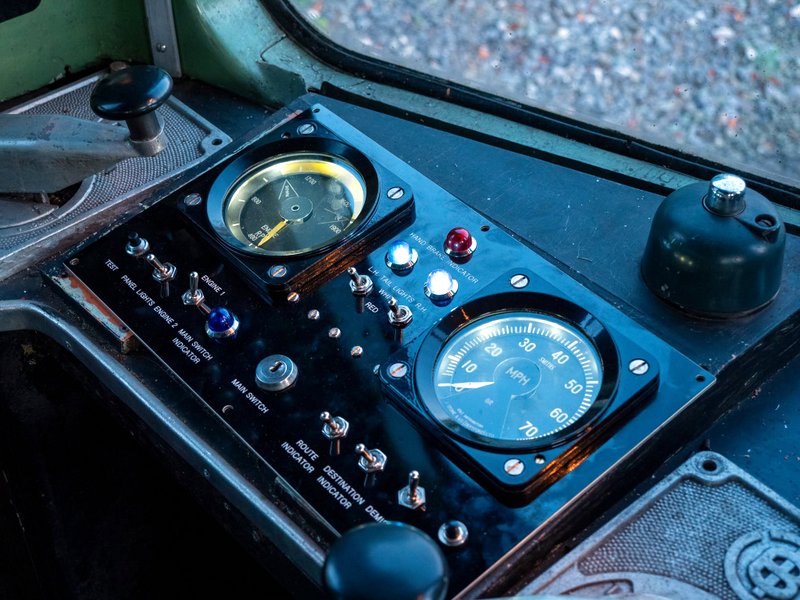
The end product - almost. Just needs fastening down.
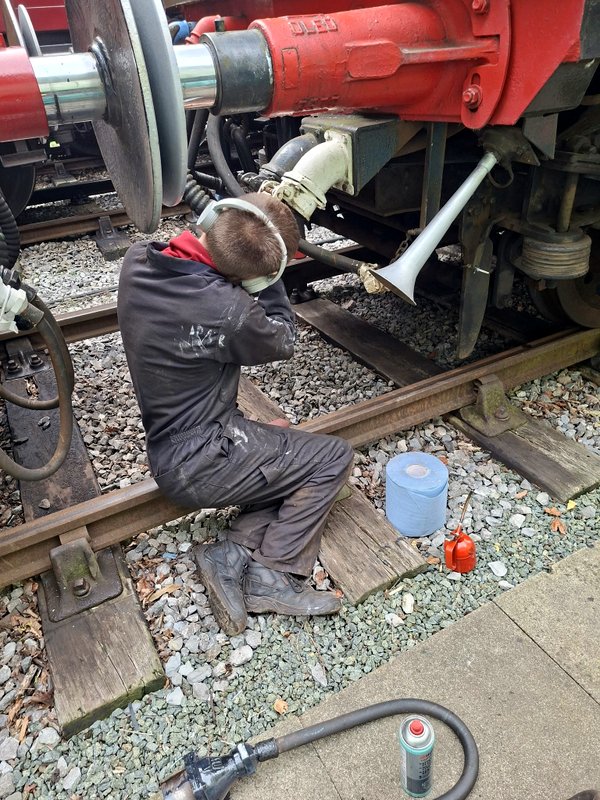
More electrics on 51813: cleaning the sockets for the jumpers that let the vehicles 'talk' to each other. No idea how long since these were used, but it looks to be many years.
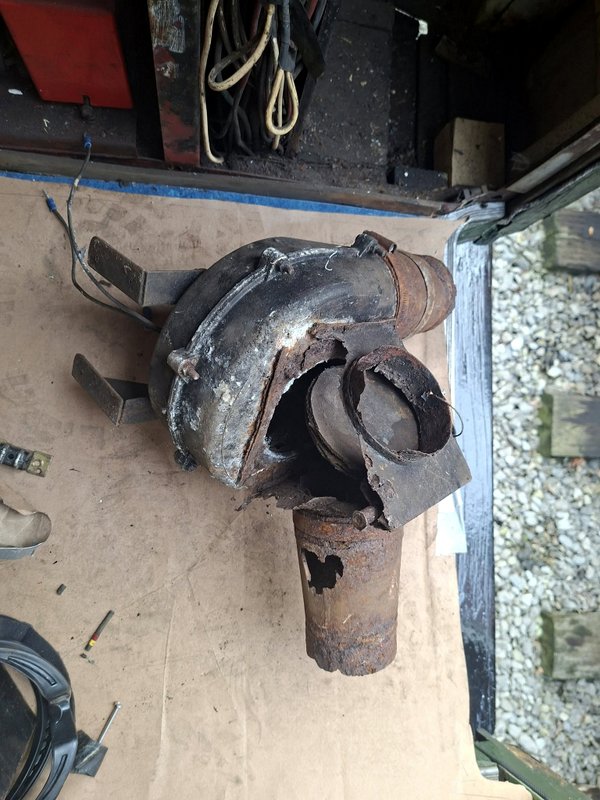
More long defunct parts of 51813 - the driver's windscreen demister. The fan has almost completely rusted to nothing and is probably beyond saving, but we'll see.
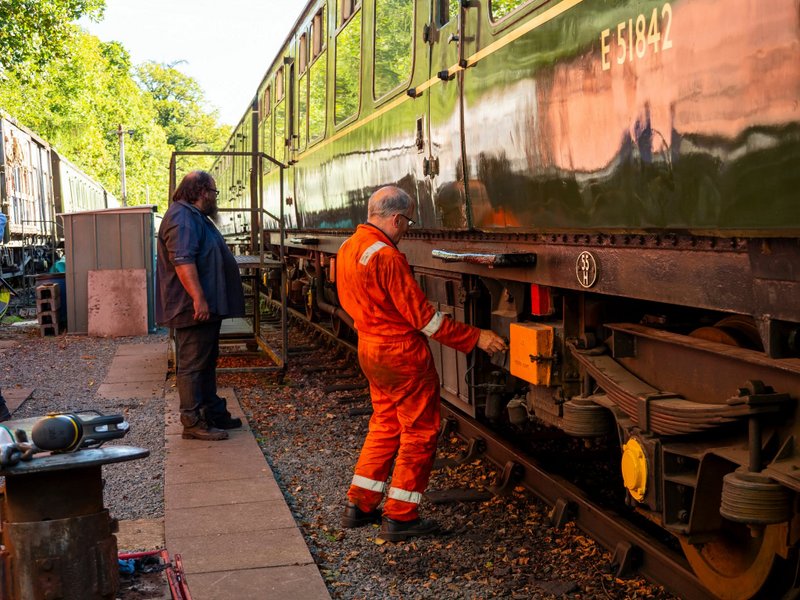
"Will it start?" wonders Graham, as Peter looks on. Yes it does, though some further attention will be needed in that area over the winter. Even with new batteries it's less than keen.
Gloucester class 100 51118/56097 (undergoing restoration at the Midland Railway, Butterley)
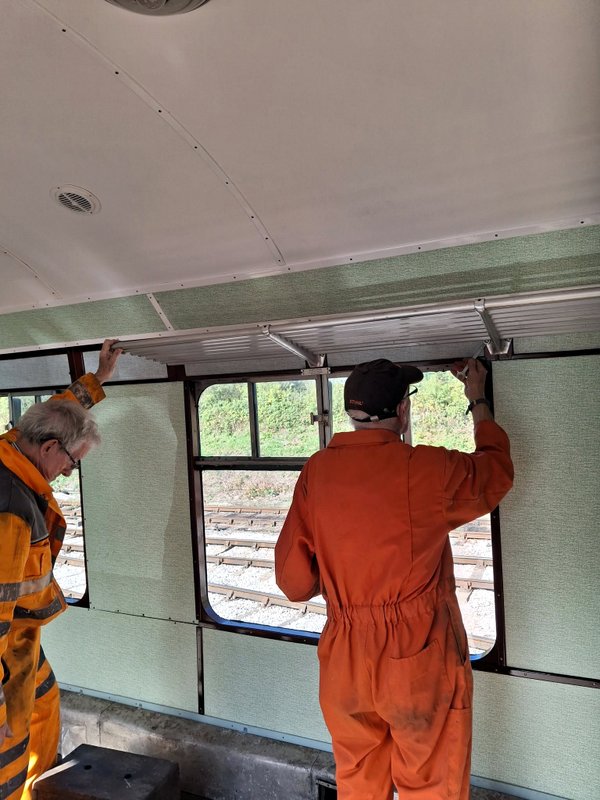
Jim and Ian W fitting another luggage rack in the Gloucester trailer 56097 at Butterley.
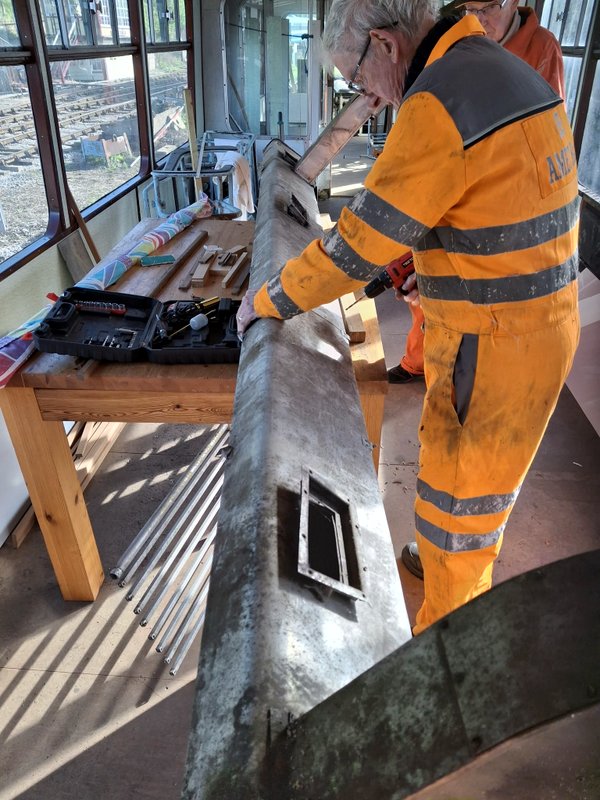
Hot air heating needs the air taking to where it needs to be. Somewhere during the restoration of the Gloucester trailer, the wrong section had been refitted. Digging through the selection of other parts, the correct one was found. Jim, Ian and Allen contemplate engineering a swap.
Thanks to Allen Chatwood, Thomas Fells, John Joyce, Andy Lowe, Mike Martin, Graham Parkin and Martin Plumb for supplying the pictures that were used in this edition.
Martin Plumb